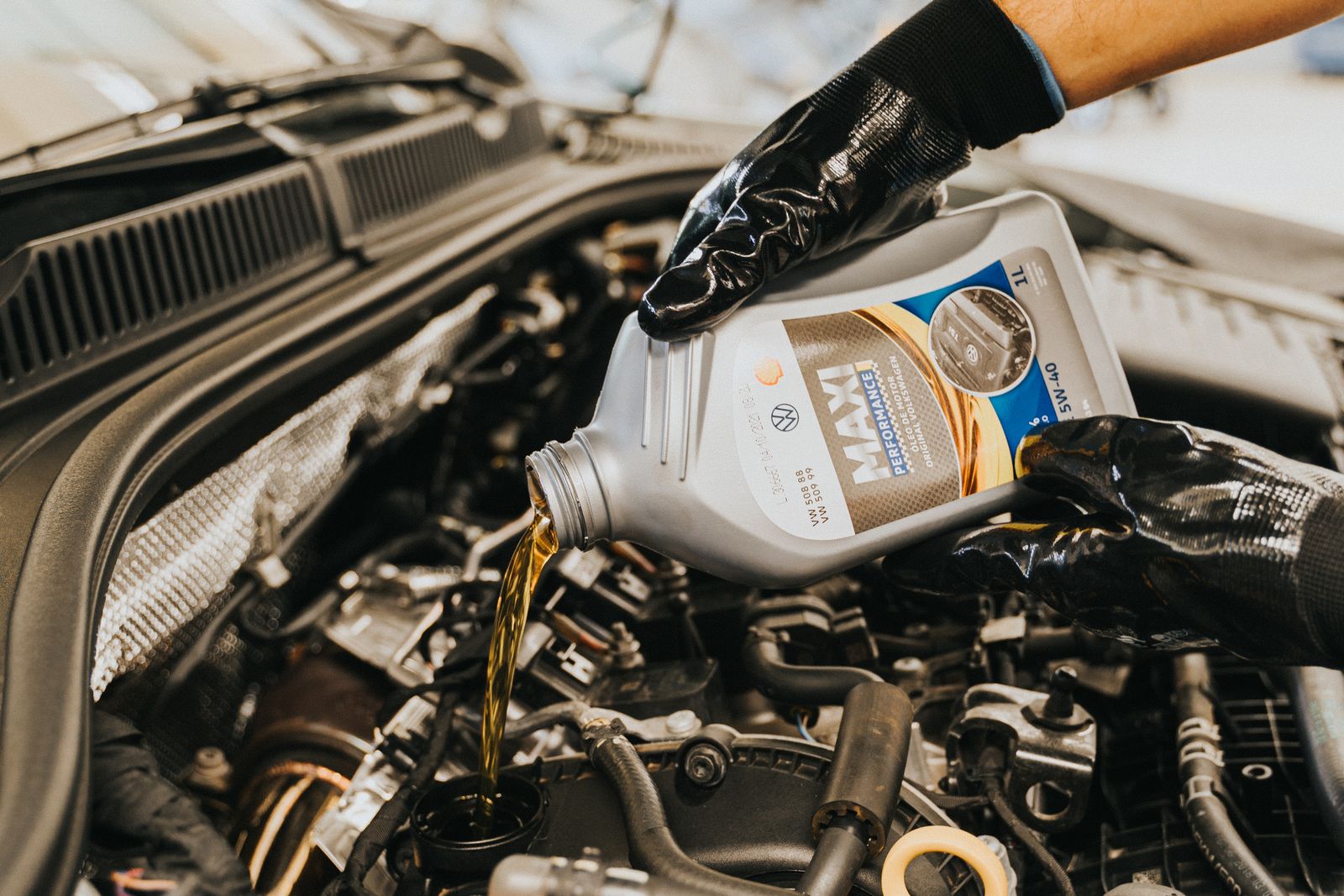
Why is my engine using oil? Causes and fixes
Every engine uses a little oil. But if you are topping up several times between services, the engine is telling you something: the oil is either leaking out or burning in the combustion chamber.
How much oil consumption is normal?
Many carmakers accept up to around half a litre per 1,000 km for engines with some mileage; healthy new engines use far less. Check your owner’s manual for the exact figure and check the dipstick every two weeks.
Where does the oil go? Two main routes
- External leaks: valve cover gasket, crankshaft seals, sump gasket or a loose oil filter. Spots under the car and a burning smell from the exhaust are the signs.
- Internal burning: oil slips past worn piston rings or hardened valve stem seals into the combustion chamber. Blue exhaust smoke, especially at start-up or under acceleration, is the giveaway.
Other common causes
- The wrong grade: an oil thinner than the manufacturer recommends passes the rings more easily in a worn engine.
- Evaporation: low-quality oils with high volatility evaporate at high temperature and are lost through the crankcase ventilation (PCV) system.
- Turbocharger seals: a worn turbo can push oil into the intake.
- Hard driving: high revs and heavy loads naturally increase consumption.
What should you do?
Start with external leaks — they are the cheapest fix. If there are none and you see blue smoke, a compression and leak-down test will find the cause. Until then, use the grade in your manual and keep checking the level. In high-mileage engines a slightly thicker oil within the manual’s range (for example 10W-40 instead of 5W-30) can reduce consumption, but it does not replace a repair.
Running low on oil is more dangerous than using it. Low oil overheats and wears the bearings, so top up as soon as the level reaches the lower mark.
Quick answers
What does blue exhaust smoke mean?
Will a thicker oil reduce consumption?
How often should I check the oil level?
See our passenger car engine oils range, or ask our sales team for a recommendation and price.