Guides

A guide to choosing and caring for lubricants

From reading an oil grade to knowing when to change it and how to store it — clear answers to the most common questions.

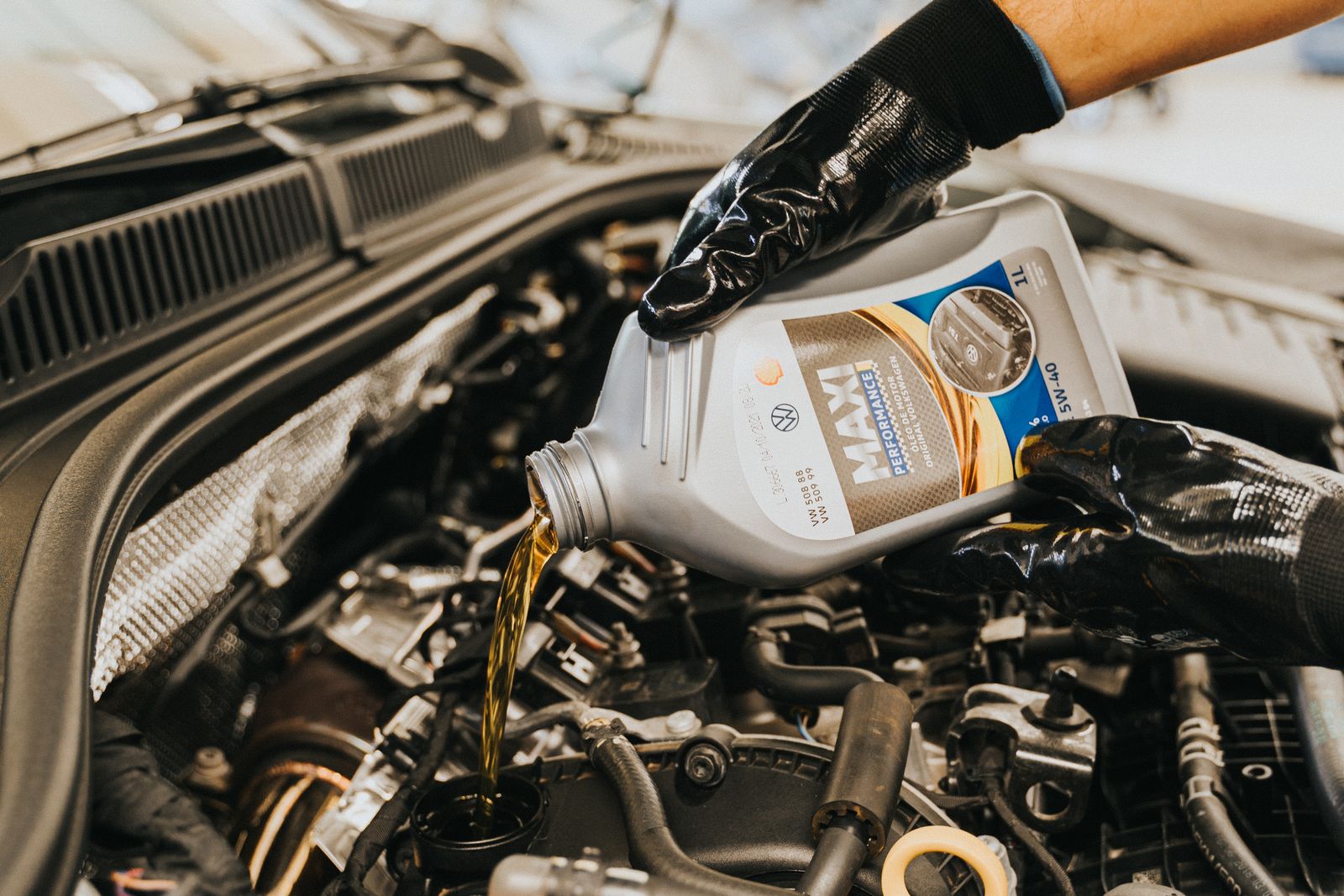
Pouring motor oil during a service
Passenger car engine oils

What does 5W-30 actually mean?

The number before the “W” (for winter) shows how easily the oil flows when the engine is cold. The lower it is, the faster the oil reaches every part at start-up — the moment most engine wear happens. The number after the dash is the oil’s viscosity at 100 °C, the engine’s normal running temperature.

So a 5W-30 flows like a thin oil on a cold morning and protects like a 30-grade oil once the engine is hot. Always use the grade in your owner’s manual: a thicker oil does not automatically mean better protection.


Passenger car engine oils
Test tubes in a laboratory
Passenger car engine oils

Synthetic, semi-synthetic or mineral?

Mineral oils are refined directly from crude oil. Synthetic oils are made from highly refined or chemically built base oils with more uniform molecules, so they hold up better against heat, oxidation and cold. Semi-synthetic oils sit in between.

Modern turbocharged and direct-injection engines usually need a fully synthetic oil. Older, simpler engines run well on a good mineral or semi-synthetic oil. When in doubt, follow the specification (API, ACEA) in your owner’s manual.

Passenger car engine oils
Car repair workshop with an engine on a lift
Passenger car engine oils

How often should you change engine oil?

As a rule of thumb, most cars on synthetic oil can run around 10,000 km or one year between changes, and around 5,000 km on mineral oil. Short trips, heavy traffic, dust, CNG fuel and towing all count as severe use and call for shorter intervals.

Check the oil level every few weeks, change the oil filter with every oil change, and keep a simple record. Your vehicle maker’s schedule always comes first.

Passenger car engine oils
Excavator moving gravel on a construction site
Hydraulic oils

Choosing the right hydraulic oil

Start with the viscosity range your pump maker recommends, then match the ISO grade to the operating temperature: ISO VG 32 for cold starts and precision systems, 46 for most machines, and 68 for hot climates and heavy presses.

Mobile equipment working outdoors does best on high viscosity-index (HV) oils, which stay in grade through the seasons. And keep the oil clean — most hydraulic failures start with dirt and water, not with the oil itself.

Hydraulic oils
Bitumen distributor truck spraying liquid bitumen on a road
Bitumen

Bitumen 60/70 or 85/100?

The penetration grade shows how far a standard needle sinks into bitumen at 25 °C. Bitumen 60/70 is harder and resists rutting in hot climates and under heavy traffic; 85/100 is softer and resists cracking in cold regions.

For highways and airports, performance-graded (PG) bitumen lets designers choose the binder based on the actual highest and lowest pavement temperatures of the project.

Bitumen
Organised warehouse with orange racking
Industrial oils

Storing lubricants the right way

Keep drums indoors or under cover, lying on their side with the bungs at the 3 and 9 o’clock positions so rainwater cannot collect on the lid. Use the oldest stock first.

Use a clean, labelled container for each product, and filter new oil before it goes into sensitive hydraulic or turbine systems. Clean oil costs far less than a new pump.

Industrial oils